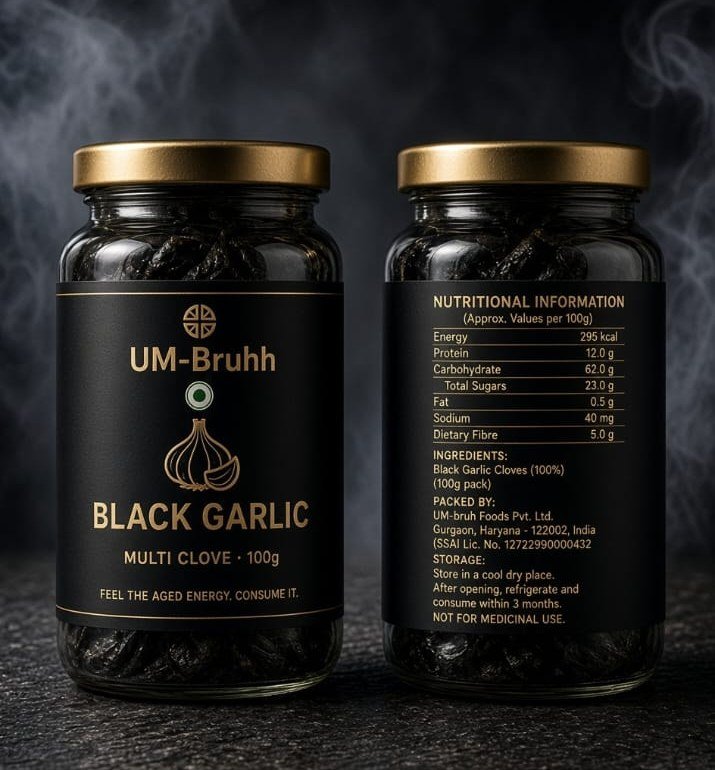
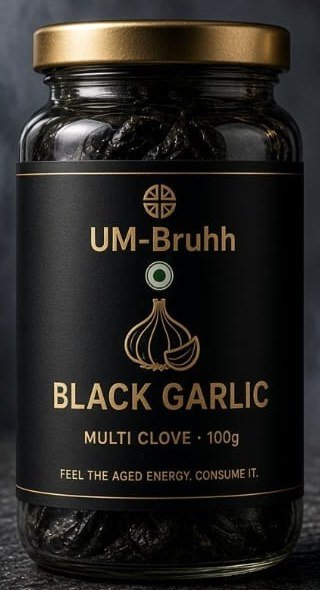
We take fresh Indian garlic and age it slowly, for weeks, under gentle heat and humidity, until it turns jet black, soft as a date and naturally sweet. It tastes of balsamic, tamarind and jaggery, with a deep umami finish. Crafted by chemists, made for cooks.
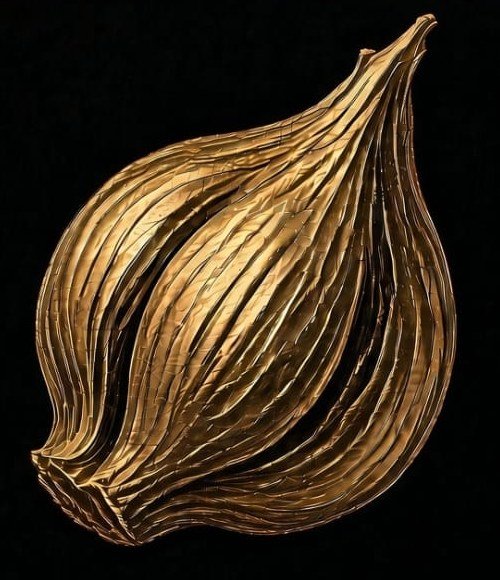

Black garlic isn't a variety. It's ordinary garlic that has been given time. Held at low, steady heat and high humidity for weeks, its natural sugars and amino acids slowly react (the Maillard reaction, the same chemistry that browns toast and roasts coffee).
The sharp bite disappears. What's left is a soft, spreadable, jet-black clove that tastes closer to a balsamic-glazed fig than to raw lehsun. There's no fermentation, no additives, and no preservatives. Just garlic and patience.
How we age itMost people's first reaction is a long pause, followed by "bruhh." That's where the name comes from.
Natural sugars caramelise slowly. Think dates and jaggery, with no sugar added.
A gentle, fruity acidity in the spirit of imli and aged balsamic vinegar.
Deep, savoury and long, like soy and roasted mushrooms. It makes dals taste slow-cooked.
Soft, chewy and spreadable. Mash a clove into butter, ghee or yoghurt in seconds.
We spent our careers thinking about reaction kinetics, heat transfer and humidity control. Then we tasted black garlic and couldn't stop asking how to do it better, and how to do it with Indian garlic.
Every batch is run like a lab protocol: logged temperatures, controlled humidity curves and a tasting panel of three very picky people.
Meet the founders
लशुन
India has known garlic for more than two thousand years. Ayurvedic texts call it lasuna, the bulb with five of the six tastes.
Read the heritageA jar of black garlic says "I know good food" without saying it. Custom sleeves and bulk pricing are available from 25 jars.
Get new recipes, batch drops and festive gifting offers. One email a month. We're patient like that.